Thailand still gives you something a lot of destinations cannot: a trip that feels big without forcing your budget to be big too.
If you want beach days, cheap eats, night markets, island energy, mountain cafés, and a social scene that starts before sunset, you can still do it here without burning through your savings. The key is being smart about transport, timing, and where you stay.
You do not need to choose between saving money and having a good time. You just need to stop thinking of budget travel as “doing less” and start treating it as “spending where it counts.”
Thailand visa updates and e-Visa rules for budget travelers
Before you price out hostels, ferry tickets, or domestic flights, check your entry rules. Thailand’s visa setup changed again, and those changes matter if you are trying to stretch your trip or keep plans flexible.
Thailand’s Department of Consular Affairs announced that, on May 19, 2026, the Cabinet approved revisions to visa exemption and visa-on-arrival rules. The 60-day visa exemption that had applied across 93 countries and territories was revoked. The 30-day visa exemption list was reduced from 57 countries and territories to 54, a new 15-day exemption category was created for 3 countries and territories, and visa-on-arrival eligibility was reduced from 31 countries and territories to 4.
That sounds messy, but there is also a very useful update on the planning side. Since January 1, 2025, foreign nationals have been able to apply for Thailand’s e-Visa from anywhere in the world except Thailand. That makes pre-trip admin much easier if you are moving around Asia before your Thailand leg or locking plans in from home.
After you check the official consular site for your passport, keep these points in mind:
- What changed: Visa Free and visa-on-arrival access became tighter in May 2026
- What it means for you: You should verify your exact entry category before booking nonrefundable transport
- Why e-Visa helps: You can sort entry paperwork before arrival instead of hoping the airport process matches old travel posts
- Best habit: Ignore outdated TikToks and check the official Thai consular source right before you fly
Realistic Thailand budget travel costs for Gen Z
Thailand can still be cheap, but “cheap” depends on your style. If your ideal trip includes dorm beds, street food, transit, and a few nights out, your daily number stays low. If you add private rooms, last-minute ferries, cocktails in tourist hotspots, and daily tours, the budget climbs fast.
The good news is that the best parts of a Thailand trip are often not the most expensive parts. A grilled skewer on the street, a market dinner, a shared songthaew, a sunset with people you just met, or a hostel event that turns into an all-night story are usually where the trip comes alive.
Here’s a realistic daily budget snapshot to help you plan:
| Travel style | Sleep | Food | Local transport | Social spend | Daily total |
|---|---|---|---|---|---|
| Ultra-budget dorm traveler | 250 to 500 THB | 180 to 300 THB | 50 to 120 THB | 150 to 400 THB | 630 to 1,320 THB |
| Social backpacker with events | 400 to 900 THB | 250 to 450 THB | 60 to 180 THB | 300 to 900 THB | 1,010 to 2,430 THB |
| Private room traveler sharing costs | 700 to 1,500 THB | 300 to 600 THB | 80 to 250 THB | 400 to 1,200 THB | 1,480 to 3,550 THB |
These ranges shift by island, season, and party calendar. Full Moon dates, holiday weekends, and high-demand beaches can push prices up quickly. Chiang Mai usually feels lighter on your wallet than the islands. Bangkok gives you a wide range, which is great if you stay near transit and avoid getting trapped in taxi-only plans.
Cheap Thailand itineraries using night buses and low-cost routes
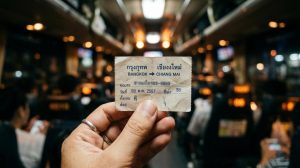
One of the best reminders that budget travel in Thailand still works comes from official tourism content itself. The Tourism Authority of Thailand has continued to feature a Chiang Mai trip framed as 3 days and 2 nights for 2 people on a budget of 5,000 baht. That itinerary uses a night bus from Bangkok to Chiang Mai and a minivan from Chiang Mai city to Mae Kampong Village.
That matters because it proves the old backpacker logic still holds. Overnight transport can save a hotel night. Shared vans still connect smaller stops. Domestic routes do not need to be fancy to be effective.
If you want your money to go further, build your route around transport efficiency first, then fit your social plans around it.
- Night buses
- Shared minivans
- Low-cost domestic flights booked early
- Trains when the timing works
- Island transfers bought as combo tickets
A good budget route often looks like this: a few nights in Bangkok, an overnight move north or south, a destination where you can walk or rent a scooter cheaply, then a stay in a social hostel or hybrid hotel where activities are already built into the experience. That setup cuts planning friction and helps you meet people without spending extra on random nights out that go nowhere.
Bangkok budget travel with BTS, MRT, and cheap last-mile transport
Bangkok gets expensive when you use it badly. It gets very manageable when you use it well.
The city’s big advantage is transit. If you stay near the BTS or MRT, you can stack a lot of your day without paying for car rides in traffic. That means lower costs, less wasted time, and a better chance of keeping energy for the night.
This works for local food runs too. Tourism Authority of Thailand content highlights Talat Phlu as reachable by BTS Talat Phlu Station, with about 1 kilometer of walking to the market. The same source notes that a motorcycle taxi transfer from MRT Tha Phra to Talat Phlu costs about 40 baht per trip. That is the kind of last-mile math you want to think about in Bangkok: train first, cheap short hop second.
You do not need a packed itinerary. You need a neighborhood strategy. Pick a base with station access, use the rail network for major moves, then walk, hop on a bike taxi, or split a short ride when it makes sense.
Social hostels, nightlife, and tours on a Thailand backpacker budget
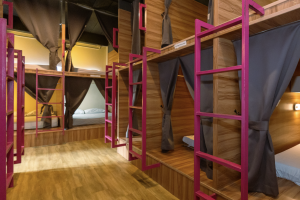
Your stay matters more than people admit. If you book the absolute cheapest bed in a dead building far from everything, you may save a little money and lose a lot of experience. If you choose a social place with common areas, staff who know the local scene, and regular events or tours, you can spend less time trying to make the trip happen and more time actually living it.
That is especially true if you are solo. A social-first hostel or hybrid hotel can turn one cheap bed into a full itinerary: pregame chats, pub crawls, boat days, group dinners, pool hangouts, and built-in people to split transport with.
To keep the vibe high and the cost under control, focus on choices like these:
- Stay smart: Pick places where events, tours, or hangout spaces are already part of the setup
- Spend socially: One good night with a group beats three random overpriced bar stops
- Split the extras: Share taxis, scooters, longtail boats, and snack runs whenever you can
- Watch the island markup: Beach hotspots can double the cost of drinks and convenience-store basics
A social trip does not have to mean a reckless trip. Budgeting a set amount for nights out usually gives you a better week than pretending you will “just see what happens.”
Gen Z travel planning with short-form video and AI tools
You probably do not plan the same way older travelers did. You see a clip, save a place, send it to a friend, ask AI for a route, then compare it with booking apps and comment sections. That approach is normal now, and the data backs it up.
A recent Deloitte survey found that more than half of Gen Z respondents use short-form social video for travel inspiration. The same survey said generative AI use for trip planning jumped 1.5 times since 2024. So yes, your feed is shaping your Thailand plans.
That can help, but it can also waste your money if you treat viral content like verified info. Visa rules change. Hidden cafés move. “Secret” beaches are often neither secret nor cheap. Transport tips from two years ago can be wrong now.
Use digital tools well, not blindly:
- Short-form video: Great for neighborhood feel, food ideas, outfit planning, and vibe checks
- Generative AI: Useful for rough itineraries, packing lists, and route comparisons
- Official sources: Best for e-Visa rules, visa exemption updates, and public transit basics
- Recent reviews: Your best filter for noise, closures, price jumps, and scam warnings
There is another useful point here. One 2025 survey from American Express Global Business Travel found Gen Z was slightly less comfortable than millennials using generative AI to book flights. That hesitation is healthy. Let AI help you draft. Do not let it make every decision without verification.
Your first 72 hours in Thailand on a budget
If you want a trip that starts strong, do not overbuild the first few days. Land, get settled near transit, and give yourself a simple win on day one. In Bangkok, that could mean a train-connected neighborhood, street food, one market, and an easy social night. No pressure to “do everything.”
Then use day two to choose your direction. North for Chiang Mai and mountain cafés. South for islands, diving, and boat parties. If your budget matters more than speed, look at night buses and trains. If time matters more than price, compare low-cost domestic flights after baggage fees.
By day three, you should already be in motion with a plan that fits your money and your mood. That is the real Thailand budget travel advantage. You are not locked into a rigid, expensive trip. You can keep things light, meet people fast, move between major stops, and still have room in your budget for the nights you will actually remember.
And that is the sweet spot: less friction, better choices, and enough cash left for one more round, one more boat day, or one more destination.